 GOV
GOV
Prop S Stormwater Project Breaks Ground on Ulena Avenue: How One Small Pipe is Part of a Much Bigger Plan
Regional collaboration previews the City of St. Louis CDBG-DR coming green stormwater improvements.


By Akima Garner, Washington University Gephardt Institute for Civic and Community Engagement 2026 St. Louis Fellow
For residents near Ulena Avenue, heavy rain has led to water pooling in yards, seeping towards garages, and threatening the homes that families have built their lives around. That kind of overland flooding is exactly what the new Metropolitan St. Louis Sewer District (MSD) projects are designed to stop.
On Wednesday, June 10th, MSD officially broke ground on a new stormwater project along Ulena Avenue and Walsh Street. The Stormwater Improvement Project marks an important milestone as the first project funded by Proposition S (Prop S). A voter-approved measure dedicated to improving stormwater infrastructure across the St. Louis region.
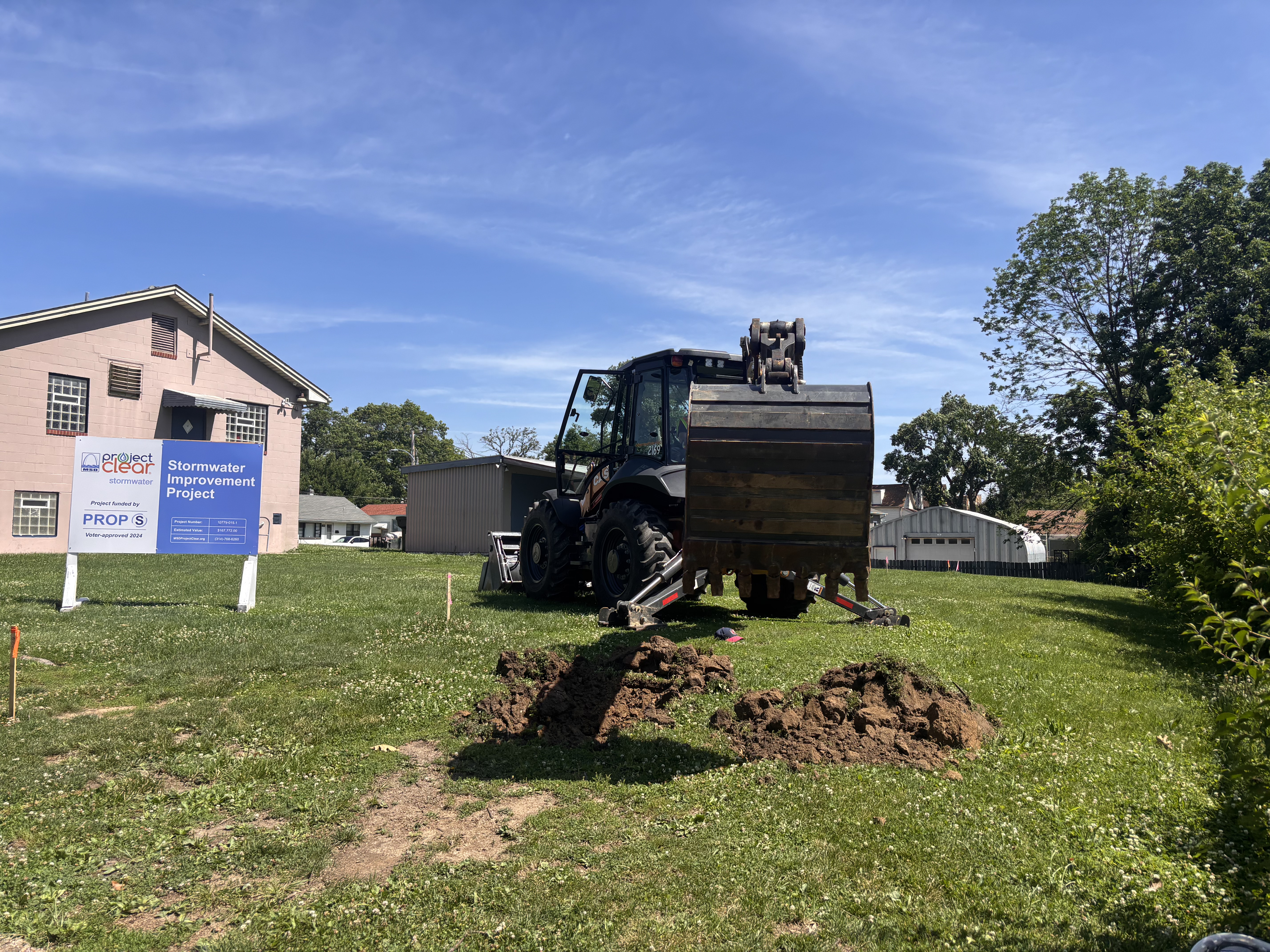 An excavator officially breaks the soil in the ceremonial ground breaking.
A Project Rooted in Community Need
The Ulena Avenue area had been experiencing overland flooding, where rainwater ponds and pools in areas that are normally dry. According to Bess McCoy, MSD's Manager of Public Affairs, the project directly addresses concerns raised through community reports and local investigations. Workers will install 150 feet of new underground storm sewer pipe and drains designed to alleviate flooding during typical rain events.
She further clarified that the project was selected because its smaller scale allowed it to move quickly through design and easement acquisition, directly getting relief to residents faster. With a budget of $170,000, the work is expected to protect two to three homes and structures. Construction is anticipated to take approximately six months. Since Ulena Avenue is a dead-end street with a limited number of affected properties, overall community disruption should be minimal. Contractors will work directly with impacted homeowners throughout the process.
What Local Leaders Are Saying
The groundbreaking drew elected officials who see this project as more than an infrastructure repair. Missouri State Senator Karla May spoke, "We're going to pass along to our next generation a better infrastructure. I am excited about the project and the positive impact on the community as a whole."
McCoy echoed that sentiment, acknowledging the significant work that still lies ahead while expressing MSD's commitment to seeing it through. The goal, she said, is a St. Louis where flooding no longer puts residents' homes and safety at risk.
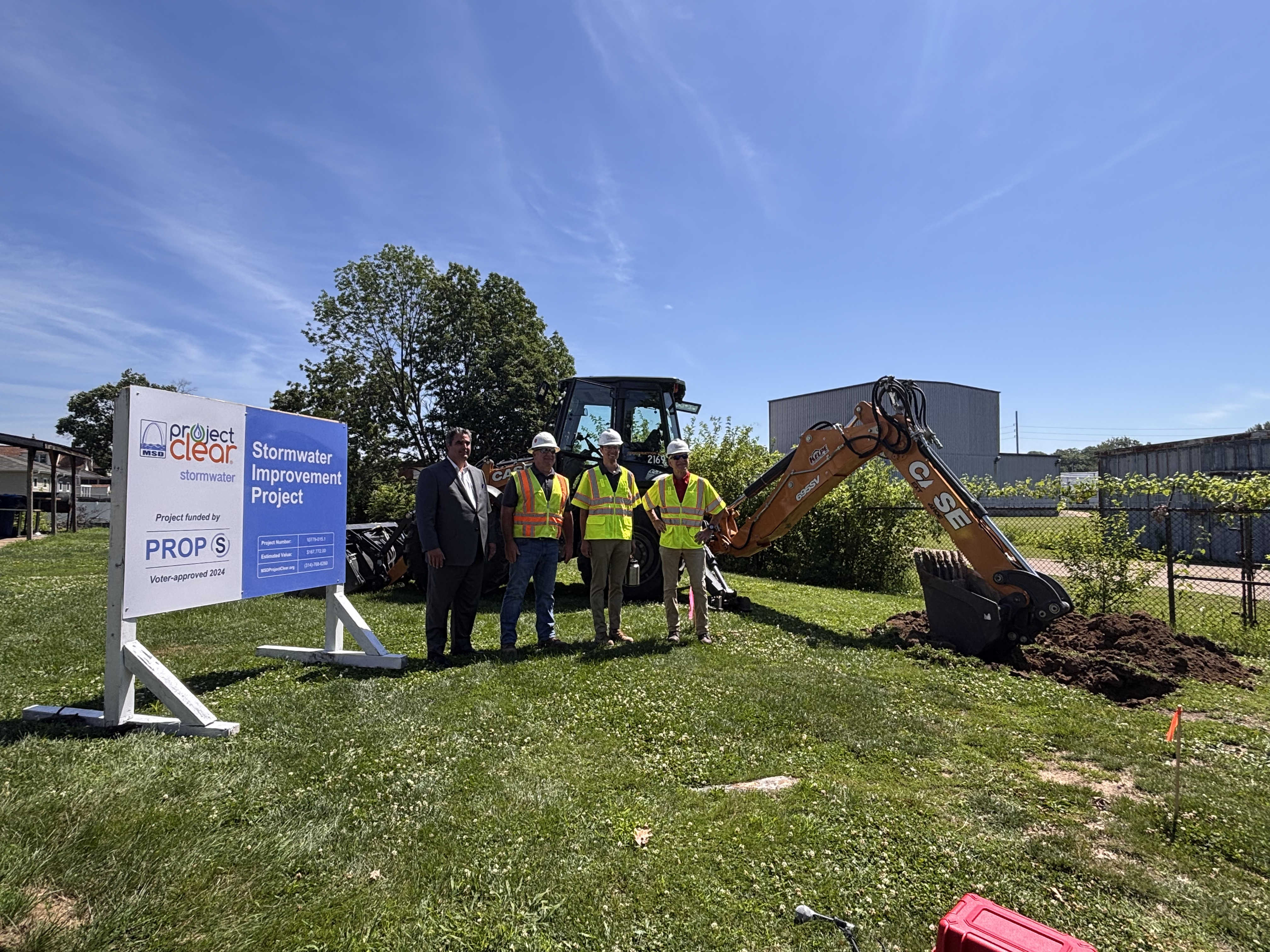 Metropolitan St. Louis Sewer District workers in front of site.
The Bigger Picture
While this stormwater improvement project may appear small in scale, it demonstrates the larger regional effort to rethink how St. Louis prepares for storm events. Through Prop S, MSD and its regional partners are demonstrating a shared commitment to improving stormwater infrastructure and protecting residents from flooding.
The City of St. Louis is playing its part too, through its partnership with MSD’s Stormwater Task Force.
"Working with the Stormwater Task Force is an important partnership for the City of St. Louis," said Andrea Godshalk, Senior Environmental Planner with the City of St. Louis Planning and Urban Design Agency (PDA).
Since the group formed about two years ago, it has grown to include partners like the Army Corps of Engineers, East-West Gateway, and numerous surrounding municipalities. Through the Stormwater Task Force, members share information, best practices, and lessons learned from each other's successes and challenges along the way.
The City of St. Louis also convened an interagency team selected as one of sixteen cities for the first Green Stormwater Infrastructure Accelerator Cohort facilitated by the Center for Regenerative Solutions. The St. Louis Green Infrastructure Accelerator included representatives from the City of St. Louis Planning and Urban Design Agency, Community Development Administration, Green City Coalition, Forestry Division, Office of Sustainability, as well as Metropolitan St. Louis Sewer District, Missouri Department of Conservation, and Forest ReLeaf of Missouri.
"Through these efforts, we are working to better understand the impacts of flooding on residents and to increase our capacity to build flood resilience within the city. It is important to plan and design with maintenance in mind from the beginning so that the City can sustain projects beautifully for the long term." Godshalk said.
CDA is supporting this broader effort using a $25.8 million HUD grant through the Community Development Block Grant–Disaster Recovery (CDBG-DR) program. That federal disaster recovery money is being used to improve long-term flood resilience following the devastating July 2022 floods. The funding is facilitating programs for planning, green infrastructure implementation, home repair and voluntary home buyouts, and emergency response capacity improvements.
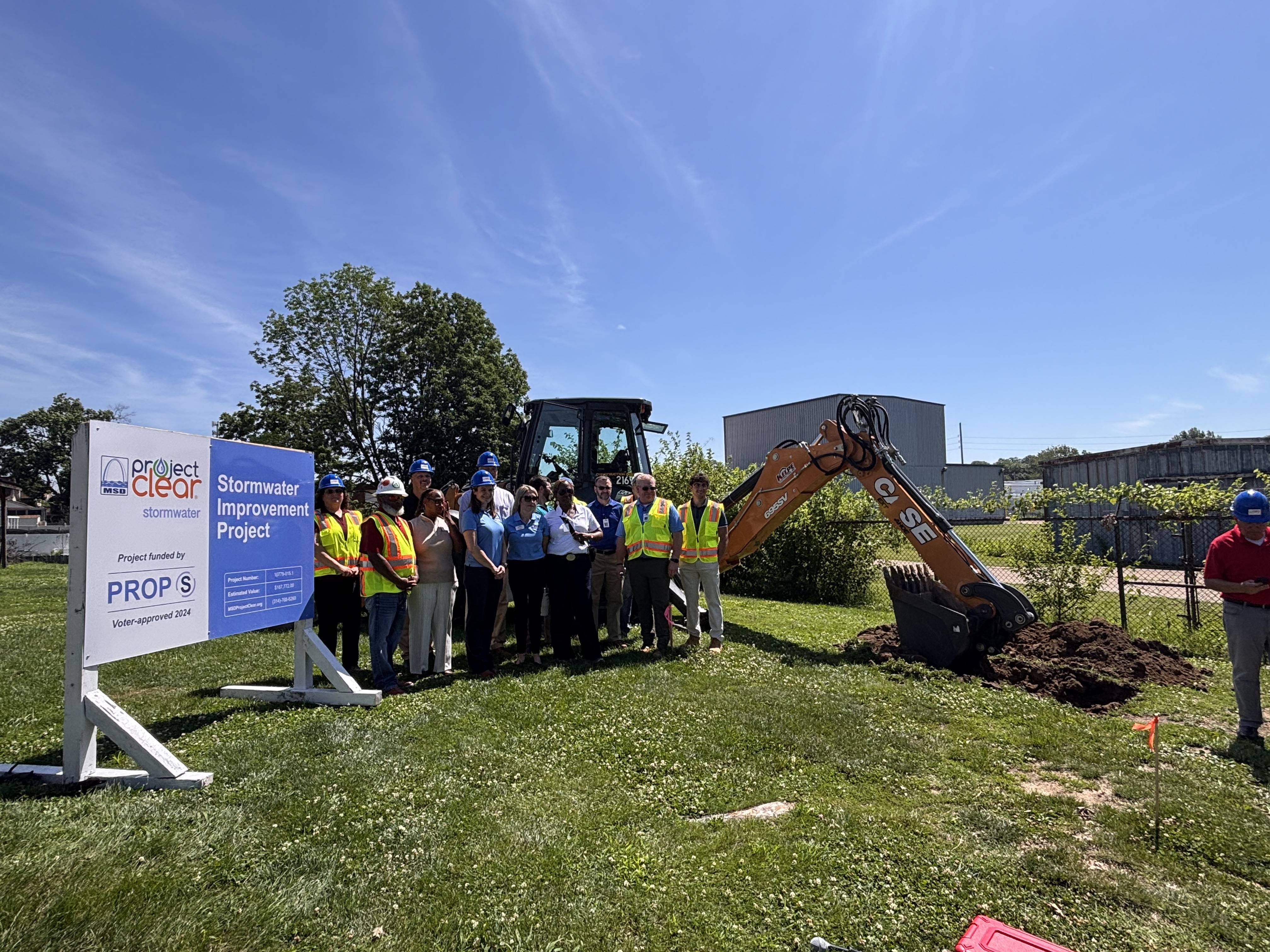
Metropolitan St. Louis Sewer District workers and city leaders in front of site.
A key part of that strategy is the city's vacant Land Reutilization Authority (LRA) lots.
"We are focusing on the siting of green infrastructure projects on flood-prone LRA lots," Godshalk said. The green infrastructure designs will also lean into nature-based approaches, with a focus on trees doing double the work, such as managing stormwater while cooling neighborhoods and making the finished projects places people actually want to be.
Used this way, flood prone LRA lots create a buffer for overland flooding while opening the door to future flood-resilient housing development. “Building new housing on flood resilient land, rather than in flood-prone areas, protects both current residents and future ones. When you build in flood-prone areas, it displaces the water to the neighbors, and they have higher flooding impacts."
"We're working to build flood resilience for the residents of the City of St. Louis, and especially for people who are impacted by multiple storm events," Godshalk said, "and we are working to do that in partnership across departments and agencies to develop a program that is maintainable and beautiful at a high level within the constraints of the maintenance capacity of the city."
Some of the areas seeing the greatest need include Baden, North Pointe, Walnut Park East, Wells Goodfellow, and Ellendale. Neighborhoods hit hardest by the 2022 flood and the storms that have followed. Residents who are curious about flood risk in their own area can check MSD's Know Your Zone interactive flood map. Residents are encouraged to notify MSD every time they experience a flood event to help prioritize project planning.
The Ulena Avenue groundbreaking is just the first step in this long-term regional effort. MSD has identified more than 500 stormwater projects to be addressed over the next 20 to 30 years, and while the full scope of that work will take decades to complete, the organization plans to keep the public informed through its website and social media, sharing updates at major milestones along the way.
One project at a time, MSD, CDA, and their community partners are working toward a St. Louis that is more resilient. One where residents don't have to worry about what the next rainstorm will bring.
-
Contact Information:
Tom Nagel
Public Information Officer II -
Department:
Community Development Administration
-
Topic:
Environment
Construction, Maintenance, and Improvements
Federal and State Government Services
Local Government Offices, Agencies, and Departments
Related Stories
Help Us Improve This Page
Did you notice an error? Is there information that you expected to find on this page, but didn't? Let us know below, and we'll work on it.
Feedback is anonymous.


